

A Utility Monitoring System is an integrated solution designed to monitor, collect, and analyze utility consumption data across industrial plants and commercial buildings. It covers utilities such as electricity, water, compressed air, steam, gas, fuel, temperature, pressure, and other critical operating parameters.
The purpose of the system is to help businesses control energy usage, detect abnormal consumption, reduce operating costs, improve equipment reliability, and support a more efficient digital operation strategy.
In modern facilities, utilities are not simply overhead costs. They directly affect production efficiency, product quality, system stability, safety, and energy-saving performance. Without a centralized monitoring platform, it becomes difficult to identify abnormal consumption, leakage, pressure drops, overload conditions, or non-optimized operation.
Microtech provides a complete Utility Monitoring System that connects field instruments and meters into a centralized platform through PLC, RTU, gateways, SCADA, HMI, historian, and reporting dashboards. The system enables operators and managers to monitor real-time data, store historical records, analyze trends, and compare utility usage by production line, shift, area, or individual equipment.
The system can monitor![Image title]()
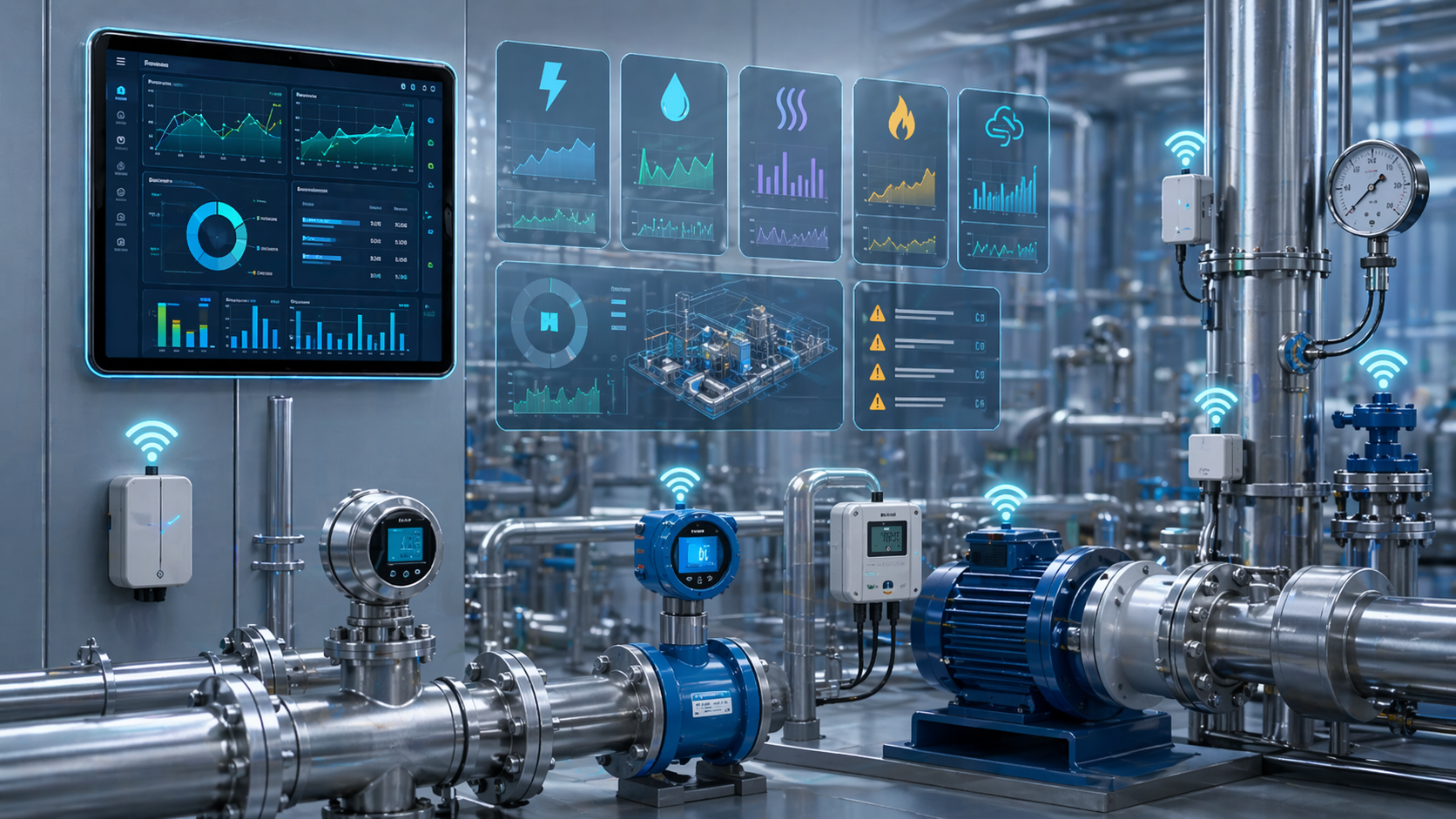
Total and branch electrical consumption
Water supply, water usage, and flow rates
Compressed air flow and pressure
Steam usage, temperature, and line pressure
Gas or fuel consumption
Ambient temperature and humidity
Operating status of pumps, fans, chillers, boilers, and cooling towers
Alarm conditions such as overconsumption, leakage, signal loss, or abnormal operation
Key features
Automatic data acquisition
The system collects data directly from power meters, water meters, flow meters, pressure sensors, energy analyzers, and field instruments.
Centralized real-time monitoring
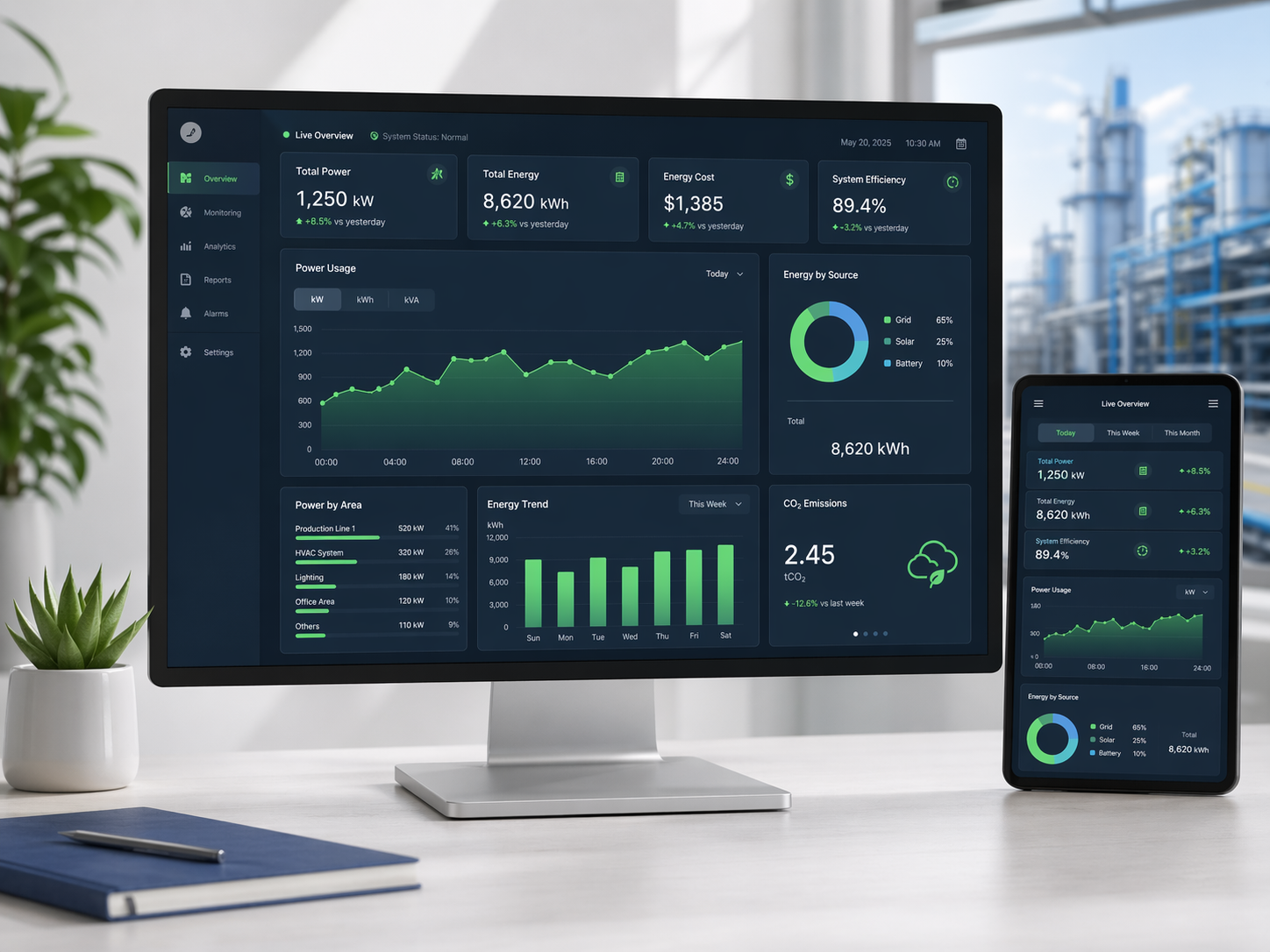
All data is displayed on a SCADA/HMI interface or dashboard, allowing operators to view the entire utility system from a single platform.
Alarm and event notification
The system generates alarms when abnormal utility consumption, pressure drops, power loss, equipment stoppage, or communication failure occurs.
Historical data logging and reporting
Recorded data can be used for analysis, trending, reporting, and performance review on an hourly, daily, weekly, or monthly basis.
Consumption performance analysis
Utility usage can be compared across lines, shifts, departments, or production output to identify cost-saving opportunities.
Easy integration with existing systems
The solution can be integrated with SCADA, BMS, EMS, PLC, ERP, or other plant management platforms.
Benefits for businesses
Reduce losses in electricity, water, compressed air, and other utilities
Detect leaks, overloads, and abnormal operating conditions early
Support preventive maintenance and improve equipment life
Optimize operational costs
Improve transparency for technical and management teams
Support energy-saving and sustainability goals
Build a foundation for smart factory and digital operations
Typical applications
Utility Monitoring Systems are ideal for:
Food and beverage plants
Animal feed factories
Industrial manufacturing plants
HVAC, chiller, boiler, and cooling tower systems
![Image title]()
Commercial buildings and industrial facilities
Any site requiring utility and energy control by area or department
Microtech services
Microtech offers complete Utility Monitoring solutions including:
Site survey and system consultation
Monitoring architecture design
Supply of measuring instruments and control panels
PLC, SCADA, and HMI programming
Industrial communication and data acquisition integration
Dashboard, reporting, and historian development
Upgrade and expansion of existing systems
Technical support, maintenance, and system optimization
Conclusion
An effective Utility Monitoring System does more than display data. It helps transform utility data into actionable insights, allowing businesses to reduce costs, improve operational reliability, and strengthen energy management performance. It is a key step toward smarter, more efficient, and more sustainable industrial operations.