

Reduce Energy Consumption – Optimize Operating Costs – Support Sustainable Growth
As energy costs continue to rise and sustainability becomes a critical business objective, an effective Energy Saving System plays an important role in helping organizations monitor energy usage, improve equipment efficiency, and reduce long-term operating expenses.
Microtech provides Energy Saving System solutions for industrial plants, commercial buildings, HVAC systems, pumping stations, production lines, and technical infrastructure. Our solution is built on automation, energy monitoring, and intelligent control platforms to help clients use energy more efficiently while maintaining system reliability, safety, and operational continuity.
What is an Energy Saving System?
An Energy Saving System is an integrated solution designed to measure, monitor, analyze, and optimize energy consumption across equipment and operational processes.
By integrating power meters, sensors, PLCs, SCADA, HMIs, variable frequency drives, and analytical software, the system can:
Monitor real-time energy consumption
![Image title]()
Identify abnormal or inefficient energy usage
Optimize operating modes of motors, pumps, fans, chillers, AHUs, and cooling towers
Reduce unnecessary demand during peak periods
Generate alarms, reports, and improvement recommendations for energy efficiency
How the System Works
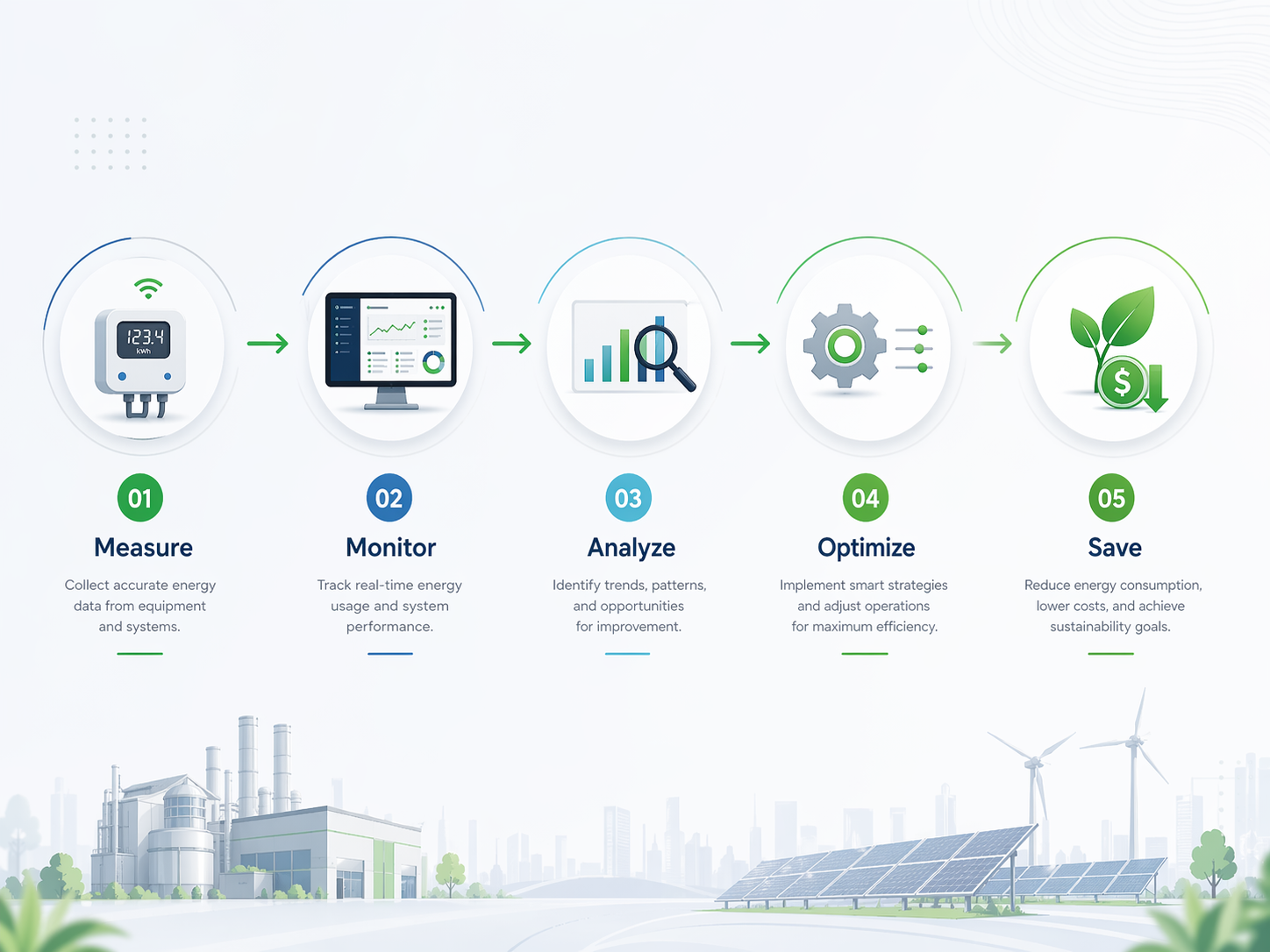
An Energy Saving solution typically follows a closed-loop process:
Data Collection → Monitoring → Analysis → Optimization → Reporting
The system collects data from power meters, temperature sensors, pressure sensors, flow meters, and equipment operating signals. This information is transmitted to the control and monitoring platform, where it is analyzed to identify consumption trends, compare performance by area or process, and highlight opportunities for improvement.
Based on actual operating data, the system can automatically or semi-automatically adjust equipment performance to reduce unnecessary power consumption. Typical optimization functions include:
Motor speed control through variable frequency drives based on actual load
Automatic equipment rotation to balance running hours
Optimization of setpoints for HVAC, chiller, and cooling tower systems
Shutdown of non-essential loads when not required
Peak demand reduction and load management strategies
Main Components of the Solution
A complete Energy Saving System usually includes the following key components:
1. Energy Measurement System
Includes multifunction power meters, power quality analyzers, current transformers, sensors, and field measurement devices installed at distribution panels or end-user equipment.
2. Control and Data Acquisition
PLCs, RTUs, or communication gateways are used to collect field data, transmit information, and execute energy-saving control strategies.
3. SCADA / HMI Monitoring System
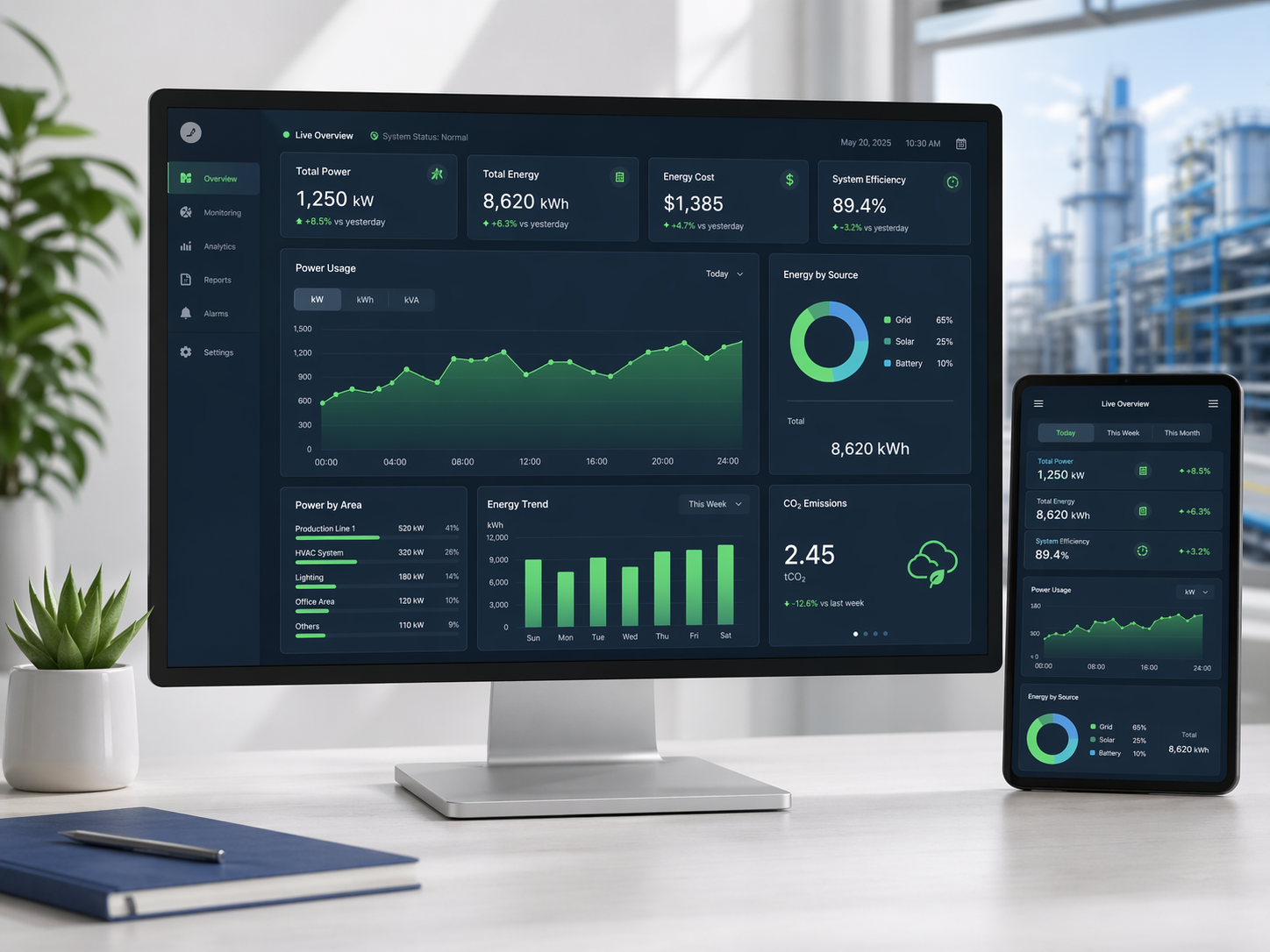
Provides real-time visualization of energy consumption, equipment status, alarms, trends, and operating conditions.
4. Reporting and Analysis Software
Supports daily, weekly, and monthly reporting; energy consumption benchmarking; equipment-level analysis; and identification of saving opportunities.
5. Optimization Devices
Includes variable frequency drives, power controllers, load relays, HVAC controllers, pump/fan control devices, and other supporting technologies for energy efficiency.
Practical Applications
Energy Saving solutions are suitable for a wide range of industries and facilities:
Manufacturing Plants
Monitor and optimize energy use for production lines, motors, air compressors, pumps, exhaust fans, dryers, kilns, and utility systems.
Commercial Buildings
Improve power efficiency for lighting, elevators, AHUs, FCUs, chillers, pumps, and ventilation systems.
HVAC Systems
Control temperature, humidity, fan speed, and chilled/condenser water flow based on actual demand to reduce electricity consumption.
Water Treatment and Pumping Stations
Optimize pump operation according to flow and pressure requirements, rotate duty pumps, and reduce wasted power.
Industrial Zones and Technical Infrastructure
Provide centralized energy monitoring and management across multiple buildings, electrical panels, or factory areas.
Benefits of Implementing an Energy Saving System
Reduced Energy Costs
Minimize wasted energy and optimize major loads such as motors, pumps, chillers, compressors, and ventilation systems.
Improved Equipment Efficiency
Equipment operates under proper load conditions, avoiding long periods of underload or overload operation.
Better Visibility and Control
Operators and management can clearly identify where energy is consumed, which equipment is inefficient, and when demand peaks occur.
Support for Predictive Maintenance
Abnormal energy patterns may indicate electrical or mechanical issues, allowing early detection before major failures occur.
Sustainable and Green Operation
Reducing energy consumption also lowers indirect emissions and supports environmental objectives, green building standards, and long-term sustainability goals.
What Microtech Provides
Microtech delivers Energy Saving solutions through a complete service approach including consulting, design, integration, programming, monitoring, and optimization, such as:
Energy usage assessment and site survey
Identification of energy-saving opportunities
Electrical, control, and monitoring system design
Supply and integration of PLC, SCADA, HMI, VFD, sensors, and power meters
Programming of control and optimization strategies
![Image title]()
Energy dashboard and reporting system development
Commissioning, tuning, and operator training
With strong experience in industrial automation and integrated monitoring systems, Microtech focuses on practical, scalable, and reliable Energy Saving solutions tailored to each client’s actual operating conditions.
Implementation Approach
An effective Energy Saving System is not limited to installing power meters. It should be built on accurate data collection, suitable control logic, and continuous performance evaluation after commissioning.
A typical implementation process includes:
Assessing the current energy usage profile
Identifying critical loads and major energy consumers
Designing the appropriate technical solution
Integrating monitoring and control functions
Measuring performance after implementation
Continuously improving based on actual operating data
Conclusion
Energy Saving is not only about reducing electricity bills. It is also a strategic solution for improving operating efficiency, increasing equipment reliability, and supporting sustainable development.
With capabilities in automation, control, and system integration, Microtech is ready to support clients in implementing modern and effective Energy Saving solutions that match real operational requirements.