

HVAC System Overview: Essential Knowledge of Air Conditioning, Chiller Systems, and Energy Performance
HVAC systems play a vital role in controlling temperature, humidity, airflow, and indoor air quality in buildings and industrial facilities. This article provides an overview of key HVAC topics, including psychrometrics, cooling load, chilled water systems, pumping, chillers, and energy performance.
HVAC (Heating, Ventilation and Air Conditioning) is a system designed to control indoor environmental conditions in commercial buildings, factories, technical rooms, cold storage areas, and industrial facilities. A well-designed HVAC system not only improves occupant comfort, but also enhances operational stability, equipment protection, and energy efficiency.![Image title]()
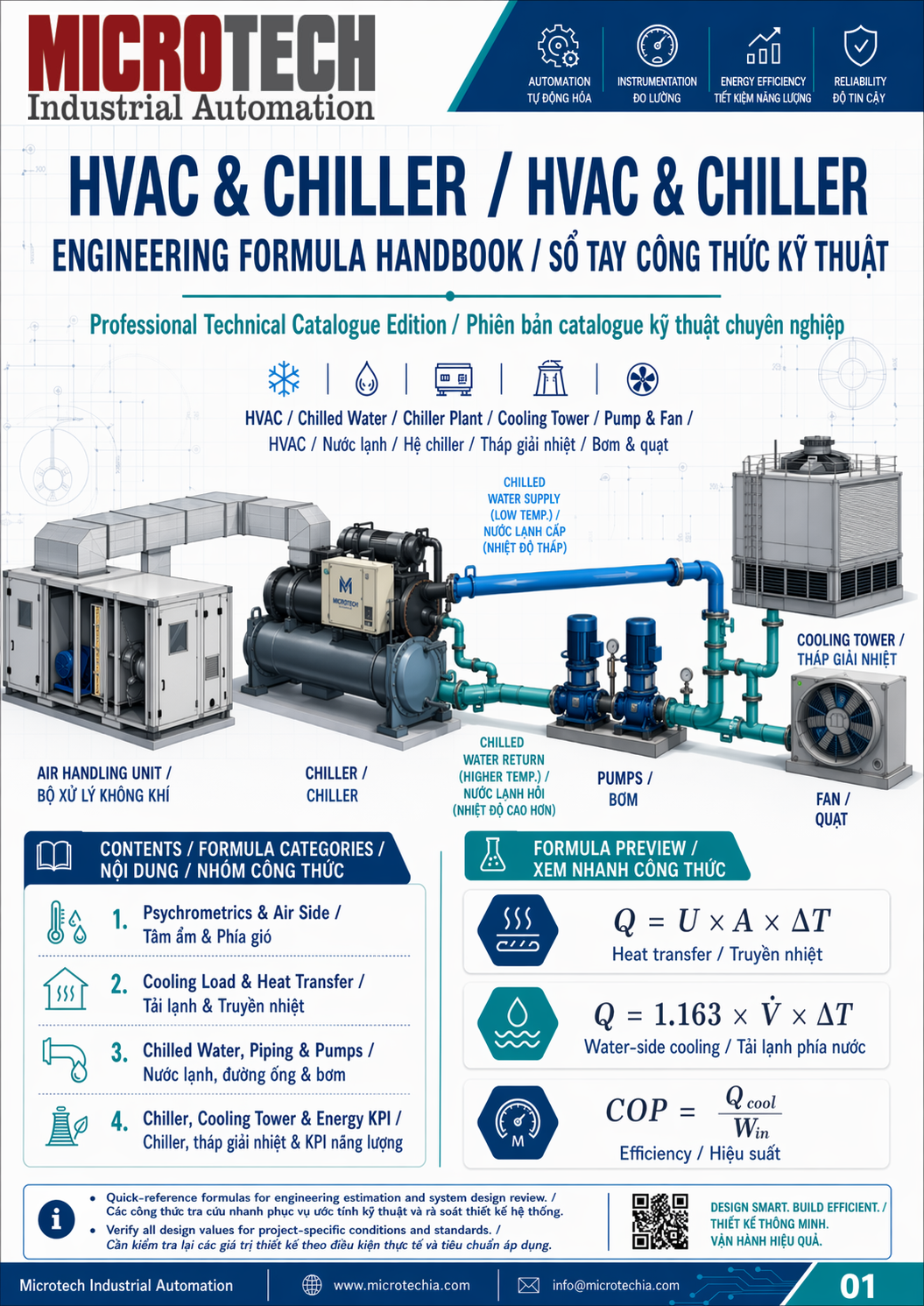
In practice, HVAC is more than a combination of mechanical equipment such as AHUs, FCUs, chillers, pumps, and cooling towers. It is an integrated engineering system where heat transfer, moisture control, airflow, water circulation, and automatic control all work together.
A complete HVAC system typically includes air handling, air distribution, chilled water generation, chilled water circulation, heat rejection, and control systems. To better understand and operate such a system, engineers should be familiar with the following core areas of HVAC knowledge.
1. Psychrometrics and Air Side in HVAC
Psychrometrics is the foundation for understanding the condition of air, including temperature, humidity, and heat content. It is essential for analyzing supply air, return air, sensible cooling, latent cooling, and coil performance.
At the same time, the air-side aspect of HVAC focuses on airflow rate, air changes per hour, air velocity, and the operating conditions of AHUs and FCUs. These topics are especially important in applications requiring environmental control, such as food plants, cold rooms, offices, technical areas, production zones, and cleanrooms.
Psychrometrics & Air Side]
A proper understanding of psychrometrics helps engineers evaluate air conditions before and after the cooling coil, assess dehumidification performance, maintain indoor comfort, and determine the required supply airflow for each conditioned space.
2. Cooling Load and Heat Transfer
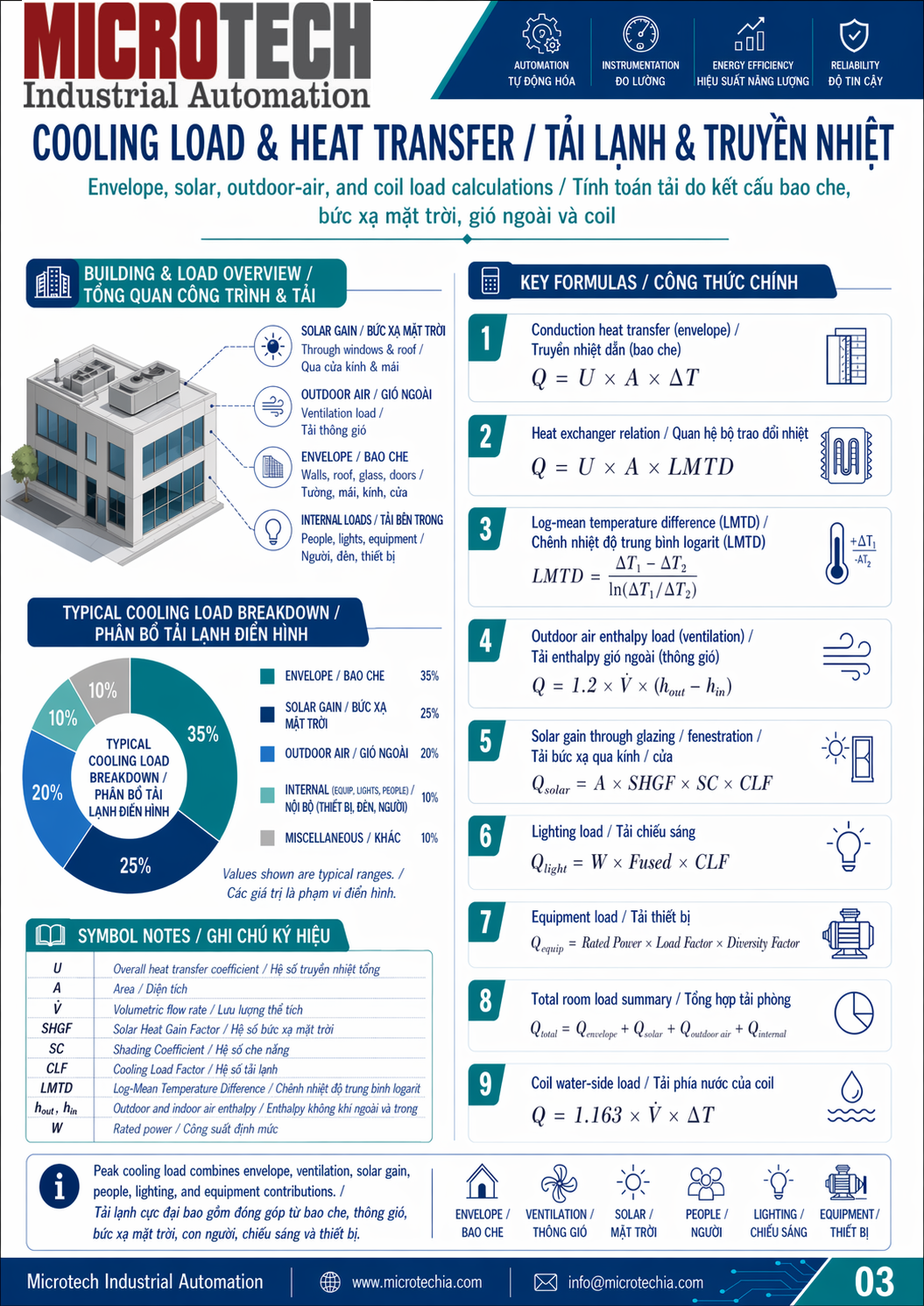
One of the most important steps in HVAC design is determining the cooling load. This forms the basis for selecting the right capacity of chillers, AHUs, FCUs, and supporting equipment. Cooling load in a building usually comes from multiple sources, including the building envelope, solar radiation, outdoor air, occupants, lighting, and internal equipment.
In addition, heat transfer is a key concept in HVAC, especially for walls, roofs, glazing, cooling coils, and heat exchangers. Understanding how heat enters or leaves a space helps improve system design accuracy and prevents oversizing or undersizing of equipment.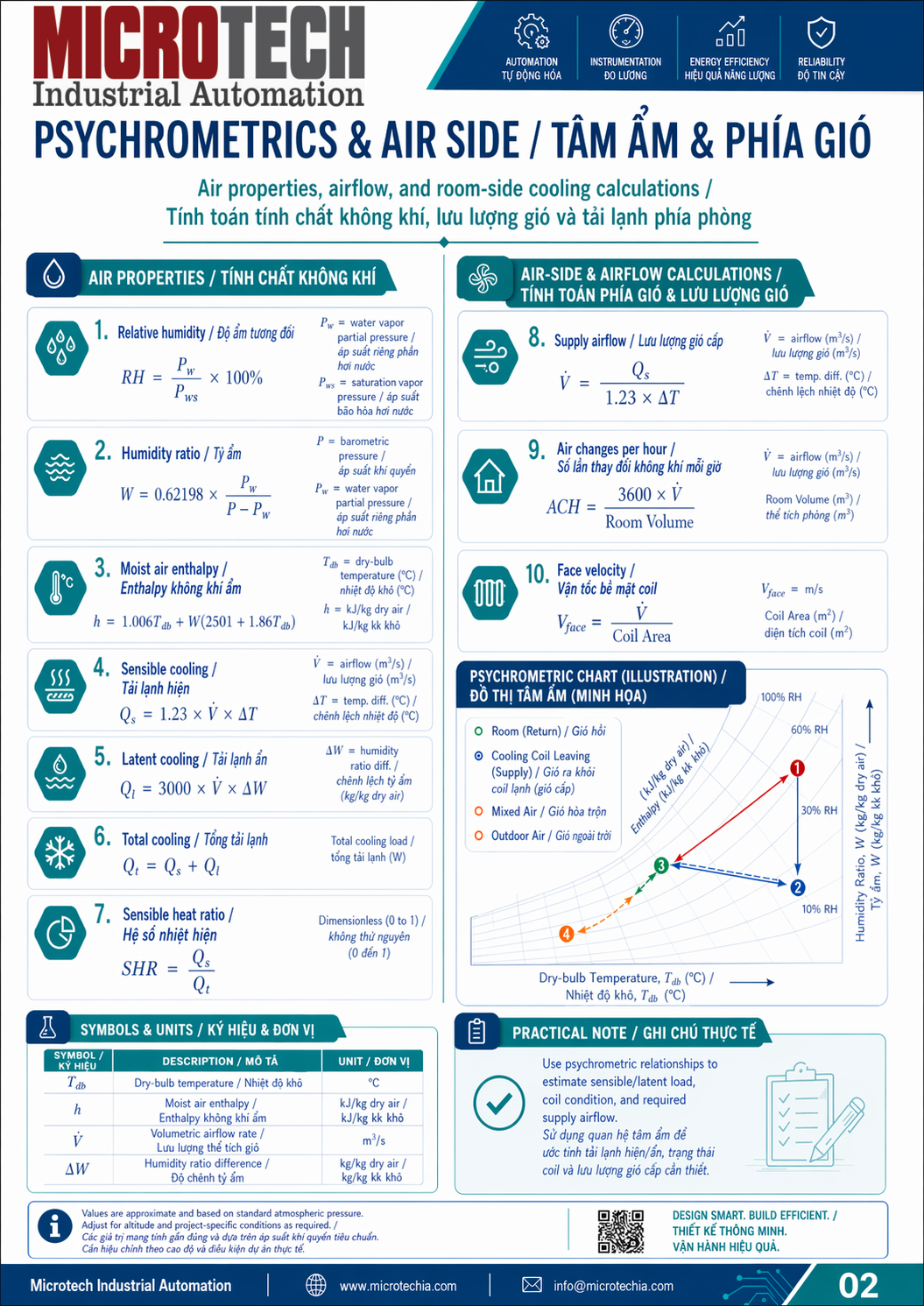
[Insert Image 3 here – Cooling Load & Heat Transfer]
In real applications, cooling load analysis is valuable not only during the design stage, but also for evaluating existing systems and identifying opportunities for performance improvement, retrofitting, or operational optimization.
3. Chilled Water, Piping, and Pumps
In HVAC systems using chilled water, water acts as the medium that transfers cooling capacity from the chiller to AHUs, FCUs, or other cooling coils. For this reason, it is important to understand water flow, supply and return temperature difference, system pressure, pipe loss, and pump power.
If the air side determines the effectiveness of heat exchange on the air side, then the chilled water and pumping system determines how efficiently cooling energy is delivered throughout the system. Poor design in this section may lead to insufficient flow, improper temperature differential, pump overload, or unnecessary energy consumption.
Well-managed chilled water systems help HVAC plants operate more reliably, reduce energy loss, improve equipment life, and support better monitoring, balancing, and system optimization.
4. Chiller, Cooling Tower, and Energy Performance Indicators
In central HVAC systems, the chiller produces chilled water, while the cooling tower rejects heat from the chiller in water-cooled applications. These two components play a major role in the efficiency and power consumption of the entire HVAC plant.
Besides understanding their working principles, engineers and operators should monitor energy performance indicators to assess actual operating conditions. These indicators help determine whether the plant is performing efficiently and assist in identifying issues such as fouled heat exchangers, improper flow, poor cooling tower performance, or chillers operating outside their optimal range.
By combining operational data with performance analysis, technical teams can build more effective energy-saving strategies, reduce operating costs, and improve the reliability of the HVAC system.![Image title]()
5. The Role of HVAC Control and Refrigeration Control
Today, HVAC is not only a mechanical system, but also a highly integrated automatic control system. HVAC control allows users to monitor and control temperature, humidity, pressure, flow, fan status, pump status, valve position, chiller operation, and cooling tower performance through PLC, HMI, SCADA, BMS, or DDC platforms.
In cooling-related applications, Refrigeration Control plays an important role in managing compressors, evaporators, condensers, expansion valves, sensors, and protective devices. It helps maintain precise temperature control, stabilize cooling performance, protect equipment, and improve the operating efficiency of the overall refrigeration and HVAC system.
A system may be well designed mechanically, but if the control strategy is not properly implemented, significant energy waste can still occur. Therefore, design, equipment selection, and control strategy should always be considered together.
Conclusion
HVAC is a comprehensive engineering system that combines multiple technical areas, from air properties, cooling load, chilled water, and pumping to chillers, heat rejection, and automation. A clear understanding of these fundamentals helps engineers design more accurately, operate more reliably, and optimize energy use more effectively.
With the support of the summary content in this article and the accompanying visual reference sheets, readers can gain a broader and more practical understanding of HVAC systems and the relationship between the main sections of a modern air conditioning and cooling plant.